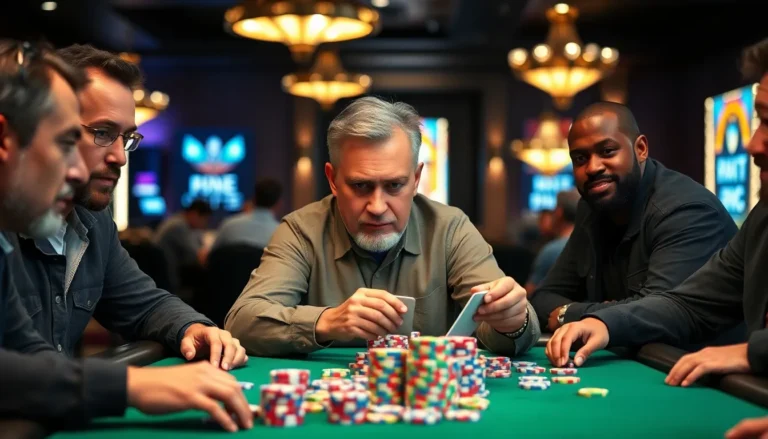
In the high-stakes world of poker, bluffing is the secret sauce that can turn a mediocre hand into a winning masterpiece. It’s the art of deception that separates the amateurs from the pros, and mastering this skill can make anyone feel like a poker wizard. Imagine sitting at the table, your heart racing, while you effortlessly convince your opponents that you hold the winning hand—when in reality, you’re clutching a pair of twos.
But bluffing isn’t just about putting on a poker face; it’s a blend of psychology, timing, and a dash of audacity. Whether you’re a seasoned player or just starting out, understanding the nuances of bluffing can elevate your game and keep your rivals guessing. So, grab your chips and get ready to dive into the thrilling world of bluffing, where every hand is a chance to outsmart your competition and reign supreme at the table.
Overview Of Bluffing In Poker
Bluffing serves as a crucial tactic in poker. Mastering this skill often determines the outcome of many hands.
Definition Of Bluffing
Bluffing involves pretending to have a stronger hand than one actually possesses. Players frequently employ this strategy to deceive opponents into folding superior hands. Successful bluffing relies on timing and understanding opponents’ behavior. A well-timed bluff can shift the dynamic of a game, creating opportunities from seemingly weak positions.
Importance Of Bluffing In Strategy
Bluffing plays a pivotal role in overall poker strategy. Keeping opponents uncertain enhances a player’s advantage at the table. Players who effectively bluff can manipulate the flow of the game, leading opponents to make mistakes. Integrating bluffing into gameplay fosters adaptability and unpredictability. Over time, opponents may become hesitant to challenge a player known for crafty bluffing.
Types Of Bluffs

Bluffs in poker come in various forms, each with unique strategic implications. Understanding these categories enhances a player’s ability to manipulate their opponents effectively.
Pure Bluffs
Pure bluffs occur when a player has no chance of winning if the hand goes to showdown. They aim to convince opponents that the player holds a stronger hand than they do. Successful pure bluffs rely heavily on the player’s ability to read the situation and grasp their opponents’ tendencies. Timing plays a critical role; launching a pure bluff on the right street can lead to maximum impact. For instance, betting aggressively on the river after a favorable board texture often persuades opponents to fold better hands. Employing this tactic requires confidence and a deep understanding of the game dynamics.
Semi-Bluffs
Semi-bluffs combine elements of bluffing and drawing. Players hold a hand that might improve with future cards, like a flush or straight draw. If the hand doesn’t improve, players still project strength and can push opponents into making tough decisions. A semi-bluff often occurs when a player bets or raises with a drawing hand. This strategy maintains the potential to win, either by improving the hand or forcing opponents to fold. For example, betting with a flush draw on the turn might lead opponents to fold, awarding the pot without a showdown. Mastering semi-bluffs allows players to balance aggression with potential outcomes.
Factors To Consider When Bluffing
Bluffing effectively involves several key factors that can significantly impact its success.
Opponent’s Tendencies
Understanding an opponent’s tendencies plays a crucial role in successful bluffing. Aggressive players may call more often, while passive players tend to fold easily. Observing their betting patterns helps identify whether they’re likely to fold under pressure. A player skilled at reading tells can also notice emotional cues that indicate weakness. Moreover, if an opponent has shown a tight playstyle, it increases the chances that they will fold to a well-timed bluff.
Table Dynamics
Table dynamics can greatly influence the effectiveness of a bluff. Factors such as stack sizes and player types affect decisions. If many players remain in the hand, the likelihood of someone holding a strong hand increases. A player should consider the overall behavior of others on the table. If many players are folding, a bluff may become more effective due to perceived strength. Additionally, the stage of the tournament or cash game can also dictate how well a bluff will be received.
Position At The Table
Position at the poker table is vital when considering a bluff. A player situated in late position often has an advantage, as more information on opponent actions becomes available. Bluffing from early position carries more risk, particularly against cautious opponents. Furthermore, if a player has shown strength earlier in the hand, bluffing later can become more effective. Recognizing how position influences the flow of the hand allows for more strategic decision-making in bluffing scenarios.
Tips For Successful Bluffing
Bluffing effectively requires a strategic approach. Players must fine-tune their timing and adapt to the flow of the game.
Timing Your Bluff
Timing sets the stage for a successful bluff. Players often choose moments when opponents display signs of uncertainty. Executing a bluff after a significant bet or raise can create doubt about the strength of their hand. Thus, players increase the chances of forcing an opponent to fold. Additionally, considering the board texture helps gauge if a bluff will resonate. Tables with coordinated cards can be ideal for creating convincing narratives.
Reading Your Opponents
Understanding opponents’ tendencies informs bluffing decisions. Observers pay attention to betting patterns and reactions during play. Aggressive players might challenge a bluff more frequently while passive opponents may fold without hesitation. Therefore, discerning when an opponent is on tilt or feeling confident can guide bluffing efforts. Recognizing facial cues and body language adds another layer of insight. Utilizing this gathered data ultimately enhances bluffing success.
Maintaining Composure
Composure plays a vital role in successful bluffing. Maintaining a steady demeanor convinces opponents of a strong hand. Nervous habits and fidgeting can reveal intentions. Players often practice controlled breathing techniques to keep anxiety at bay. Confidence stems from preparation and experience, making opponents second-guess their decisions. Thus, a composed player can wield considerable influence at the table.
Conclusion
Mastering the art of bluffing can significantly elevate a player’s poker game. It’s a skill that requires practice and a deep understanding of both the game and opponents. By integrating effective bluffing strategies into their gameplay, players can create an unpredictable environment that keeps their opponents guessing.
Whether employing pure bluffs or semi-bluffs, the key lies in knowing when to act and how to read the table dynamics. A well-executed bluff not only enhances a player’s chances of success but also adds an exciting layer to the game. With confidence and strategic insight, bluffing becomes more than just a tactic; it transforms into a powerful tool in the pursuit of victory at the poker table.